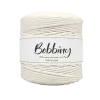
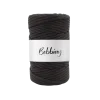
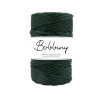
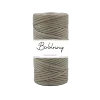
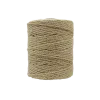
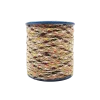
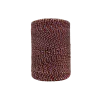


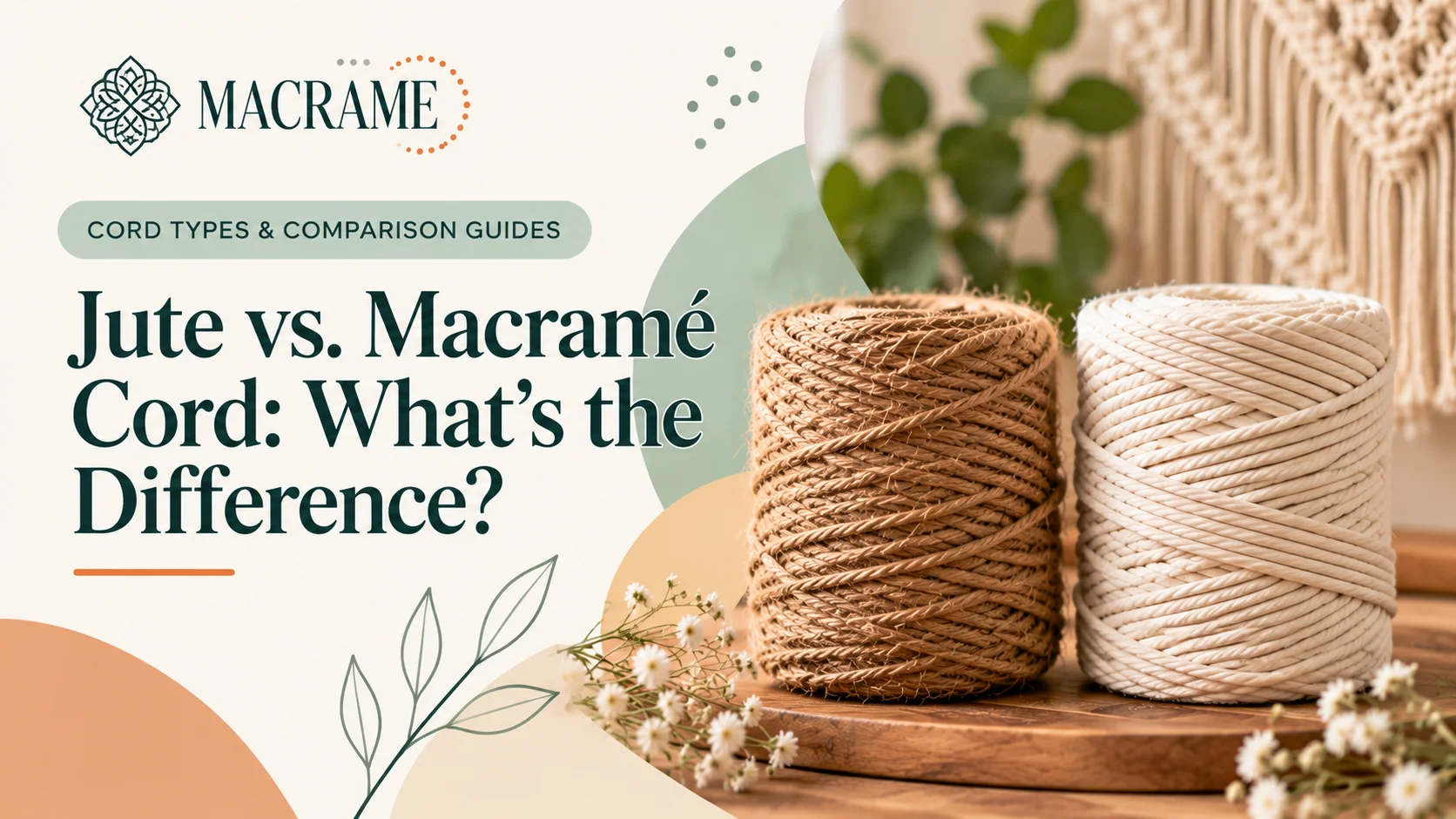
Jute vs. macramé cord sounds like a head-to-head, but it isn't quite one. Jute is one of the fibres macramé cord can be made from. The real comparison is jute against cotton, the only plant fibre grown in bigger volumes, so that's what this guide covers: stretch, moisture, sunlight, strength and sustainability, with the numbers behind each.
Quick Answer
- Jute is a bast fibre from the stems of Corchorus plants. Cotton comes from the seeds of Gossypium plants.
- Jute stretches about 1.7% before breaking. Cotton stretches 5% to 10% (MFA Boston CAMEO database).
- Jute holds more moisture: 13.75% moisture regain vs. 7.0% to 8.5% for cotton.
- Both fibres degrade in sunlight. Jute also deteriorates rapidly when wet.
- Jute grows in about 120 days with little or no fertiliser or pesticide, according to the FAO.
Rachit's note
The question I hear most is simple: does jute even work for macramé? People search "jute cord for macrame" on our own site before they buy. It does, with a few trade-offs, and that's what this guide is about.
Sources: MFA Boston CAMEO database, FAO.
What Is Jute Cord?
Jute cord is made from jute, a bast fibre stripped from the stems of Corchorus capsularis (white jute) or Corchorus olitorius (tossa jute). The museum textile database at MFA Boston describes the raw fibre as pale brown, soft, lustrous and coarse.
Those fibres are surprisingly long. A single jute fibre runs 1 to 4 metres and measures just 17 to 20 microns across, according to the FAO. Yarn and twine are among its main uses, alongside sacking, hessian and carpet backing.
In volume terms, jute is second only to cotton among vegetable fibres (Discover Natural Fibres Initiative).

Is Jute a Macramé Cord?
Yes, jute counts as macramé cord. Britannica defines macramé as coarse lace or fringe made by knotting cords or thick threads into a geometric pattern. Jute twine is a cord, so knot it that way and you're doing macramé.
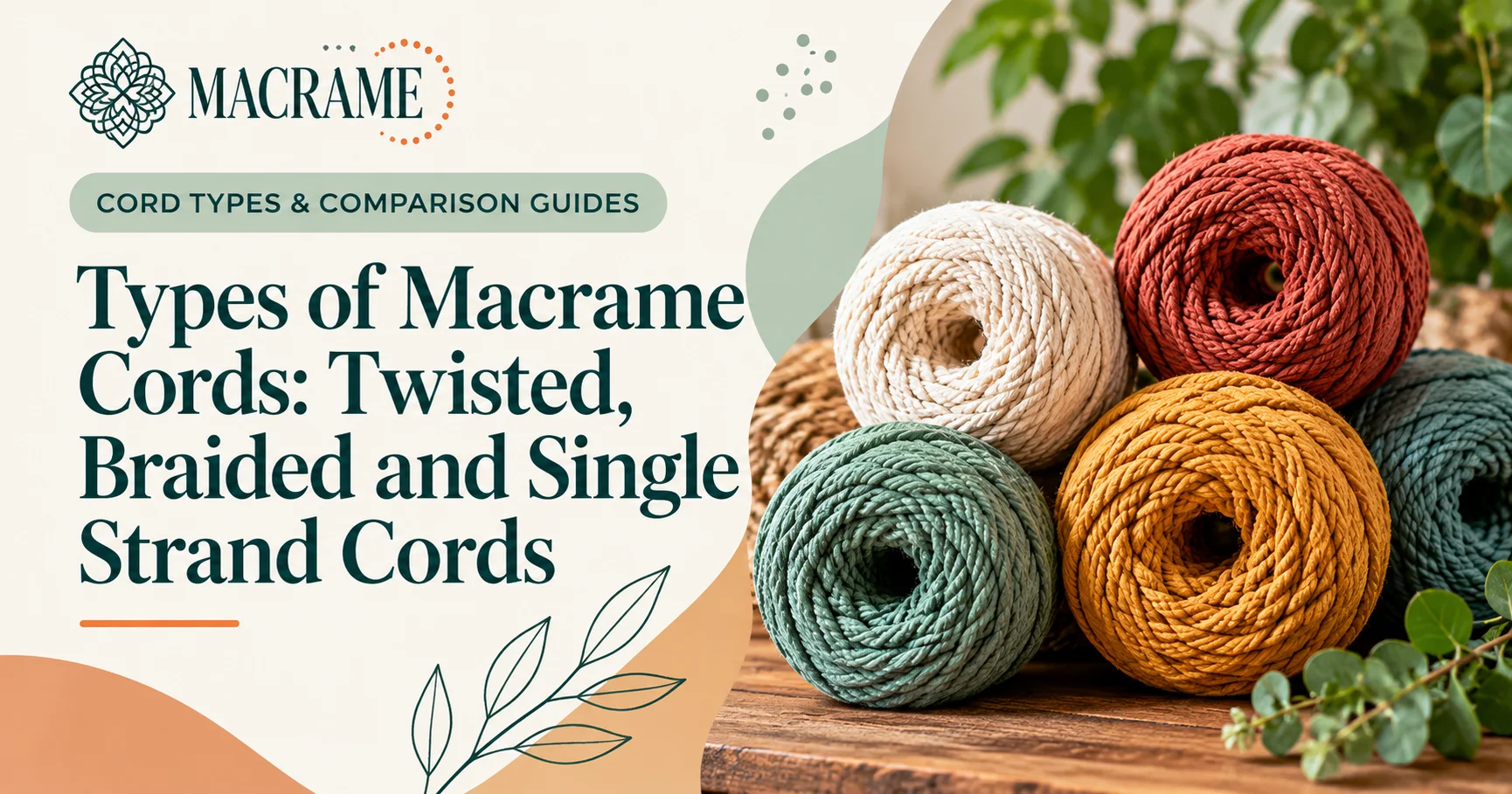
In other words, macramé cord is defined by what you do with it, not what it's made of. The more useful question is how jute behaves next to other macramé fibres like cotton. Our guide to types of macramé cords covers the twisted, braided and single strand builds.
Jute vs. Cotton Cord at a Glance
Jute and cotton differ most in stretch, moisture and where the fibre grows on the plant. Here's the side-by-side, with fibre data from the MFA Boston museum database (jute, cotton) and production figures from the FAO and ICAC.
| Property | Jute | Cotton |
| Plant source | Stems of Corchorus (bast fibre) | Seeds of Gossypium |
| Elongation at break | 1.7% (dry) | 5% to 10% |
| Moisture regain | 13.75% | 7.0% to 8.5% |
| Density | 1.5 | 1.54 to 1.56 |
| Effect of water | Deteriorates rapidly when wet | Susceptible to mildew and bacteria |
| Effect of sunlight | Poor resistance, turns brown and degrades | Discolours and eventually degrades |
| Pests and microbes | Poor resistance to microorganisms and insects | Susceptible to mildew, bacteria and silverfish |
| World production | 2.5 to 3.2 million tonnes a year (FAO) | About 26 million tonnes, 2025/26 projection (ICAC) |
Stretch and Strength: How Jute Compares With Cotton
Jute stretches much less than cotton before it breaks. Museum textile data puts jute at 1.7% elongation when dry, against 5% to 10% for cotton. Put simply, jute gives roughly one sixth to one third as much before it snaps.
That low stretch comes paired with real strength. The FAO describes jute as having high tensile strength and low extensibility, and the Discover Natural Fibres Initiative ranks it among the strongest vegetable fibres.
Jute's catch is water. Wet jute loses so much strength that thin twine can be snapped by hand (MFA Boston).
Rachit's note
Jute is rough on the hands, and anyone who knots it for an hour will feel it. A pair of thin gloves helps. Keep a lint roller nearby too, because the fuzz gets everywhere.
Moisture, Sunlight and Durability
Jute pulls more moisture out of the air than cotton does. Its moisture regain is 13.75%, compared with 7.0% to 8.5% for cotton (MFA Boston). Moisture regain is simply how much water a dry fibre absorbs from normal air, as a share of its own weight.
Water damages jute quickly. Jute deteriorates fast when wet and has poor resistance to microbes and insects. Cotton isn't immune either. It's prone to mildew, bacteria and silverfish.
Sunlight takes a toll on both. Jute turns brown and breaks down with sun exposure, while cotton discolours and eventually degrades.
Rachit's note
In our unit, I've seen that shedding comes down to two things. First, the yarn. Jute is softened with oil before spinning, and how well that's done decides how many loose fibres stick out, and sometimes how oily the cord smells. Second, the build. Braided jute locks the fibres inside, so it sheds less than twisted. If fuzz bothers you, start with braided.
Jute risks (CAMEO)
WaterDeteriorates rapidly when wet
SunPoor resistance, turns brown
MicrobesPoor resistance, also to insects
Cotton risks (CAMEO)
DampSusceptible to mildew and bacteria
SunDiscolours and eventually degrades
PestsSusceptible to silverfish
Is Jute More Sustainable Than Cotton?
Jute is a low-input crop. It's ready in about 120 days, yields around 2 tonnes of dry fibre per hectare and needs little or no fertiliser or pesticide, according to the FAO. Each hectare of jute also takes in about 15 tonnes of carbon dioxide and gives off about 11 tonnes of oxygen.
Jute is also fully biodegradable and recyclable, a point both the FAO and India's Press Information Bureau make.
Cotton is grown at a completely different scale. The International Cotton Advisory Committee projected world output at about 26 million tonnes for 2025/26. That's roughly eight to ten times the 2.5 to 3.2 million tonnes of jute grown each year.
Cotton's water footprint runs into hundreds of billions of cubic metres. One 2006 study in Ecological Economics put world cotton consumption at 256 billion cubic metres of water a year over 1997 to 2001. About 42% of that came from irrigation and processing, 39% from rainfall and 19% was water needed to dilute pollution.
India's Role in World Jute Supply
India is the world's largest jute producer. The FAO puts India's share at about 60% of world jute, with Bangladesh growing about 30%. The crop needs tropical lowland conditions with 60% to 90% humidity.
India leads in finished jute goods too, with about 75% of estimated world production as of July 2026, according to a September 2026 Press Information Bureau report. Nearly 40 lakh farm families grow jute, and about 3.70 lakh people work in organised mills and diversified jute units.
Most of that processing happens in one state. West Bengal had 89 of India's 120 composite jute mills as of December 2025. In FY 2025-26, India exported 1,71,300 tonnes of jute goods worth ₹3,155.27 crore.
India's jute sector at a glance (PIB, September 2026)
Jute and Macramé Cord Sizes in Our Catalogue
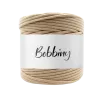
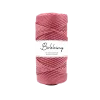
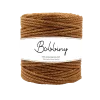
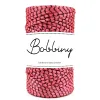
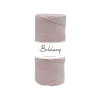
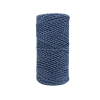
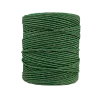
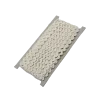
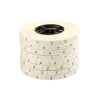
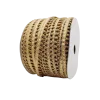
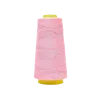
Our catalogue lists jute cord and other macramé cords in several thicknesses. Product names in the current catalogue include:
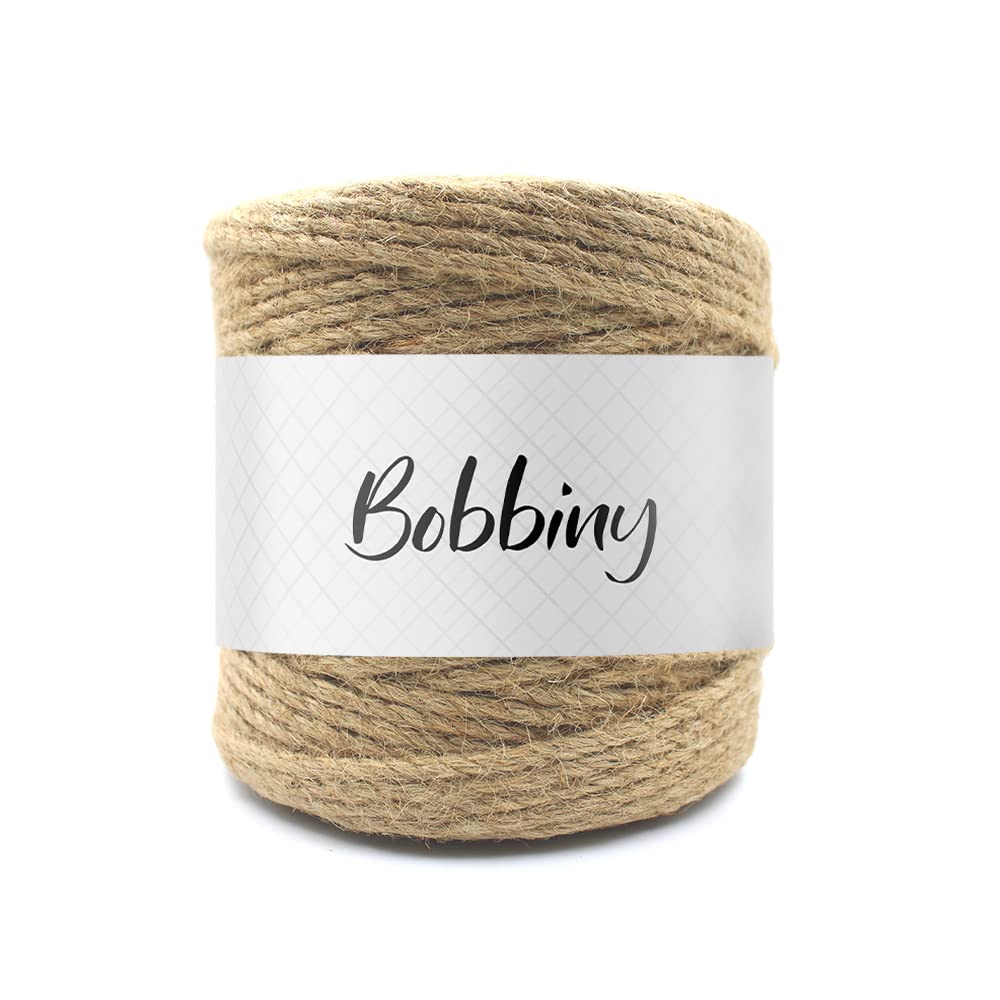

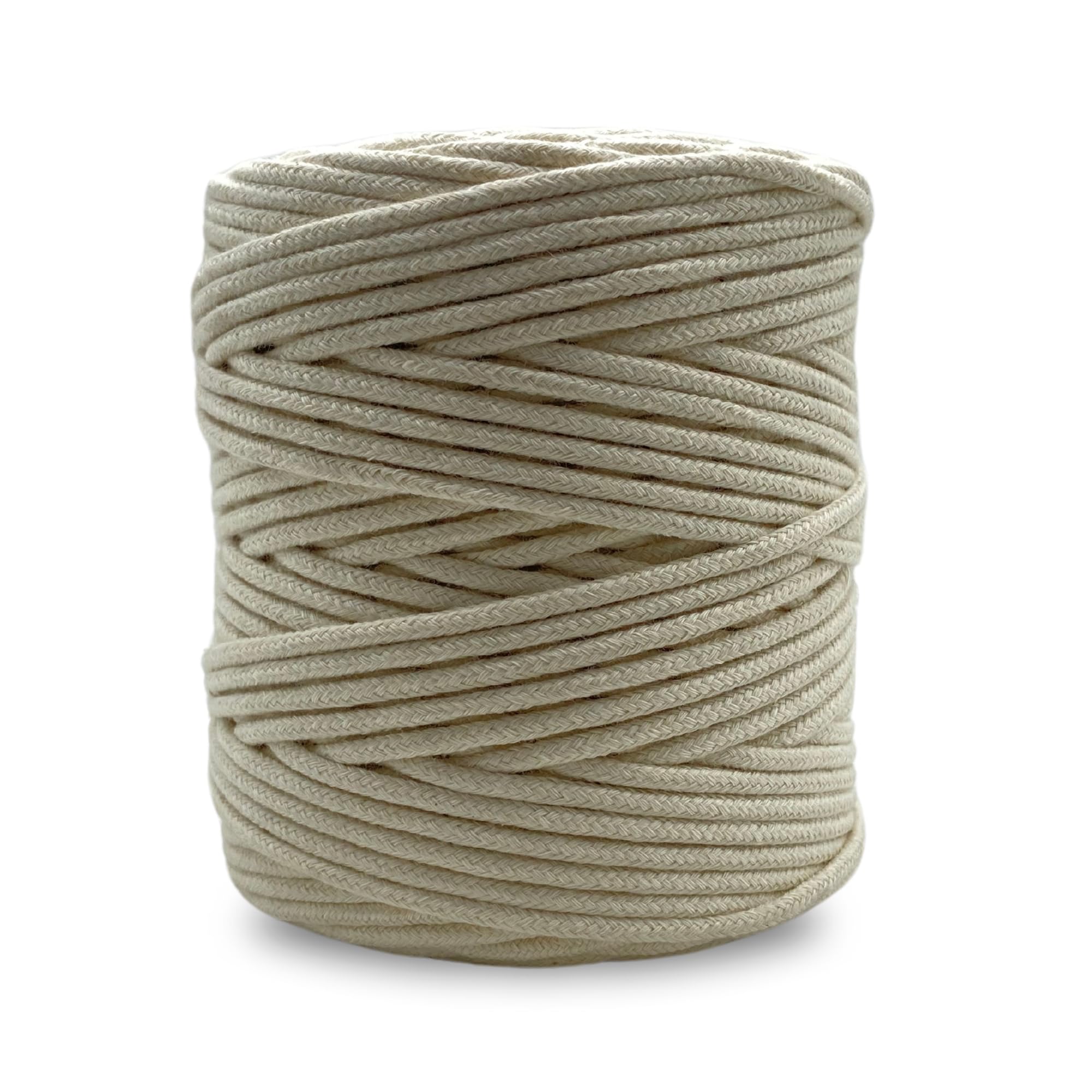
For help choosing a thickness, see our macramé cord thickness guide. To work out how many metres to buy, see our guide to how much macramé cord you need. New to the craft? Start with what macramé is and the 13 most common beginner mistakes.
Rachit's note
Twisted jute is the backbone of our jute range. We make it in 91 variants across colours, thicknesses and lengths, so it's the easiest place to start.