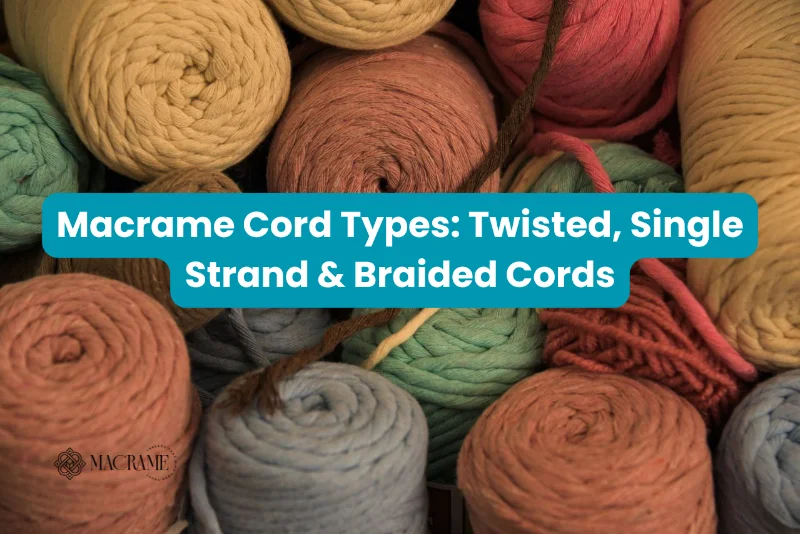
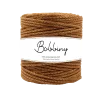
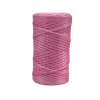
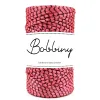
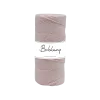
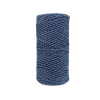
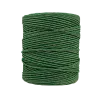
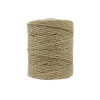
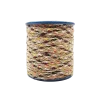
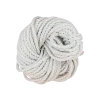
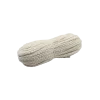
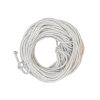
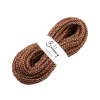
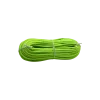
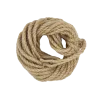

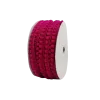
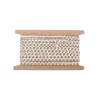
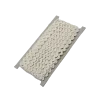
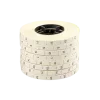
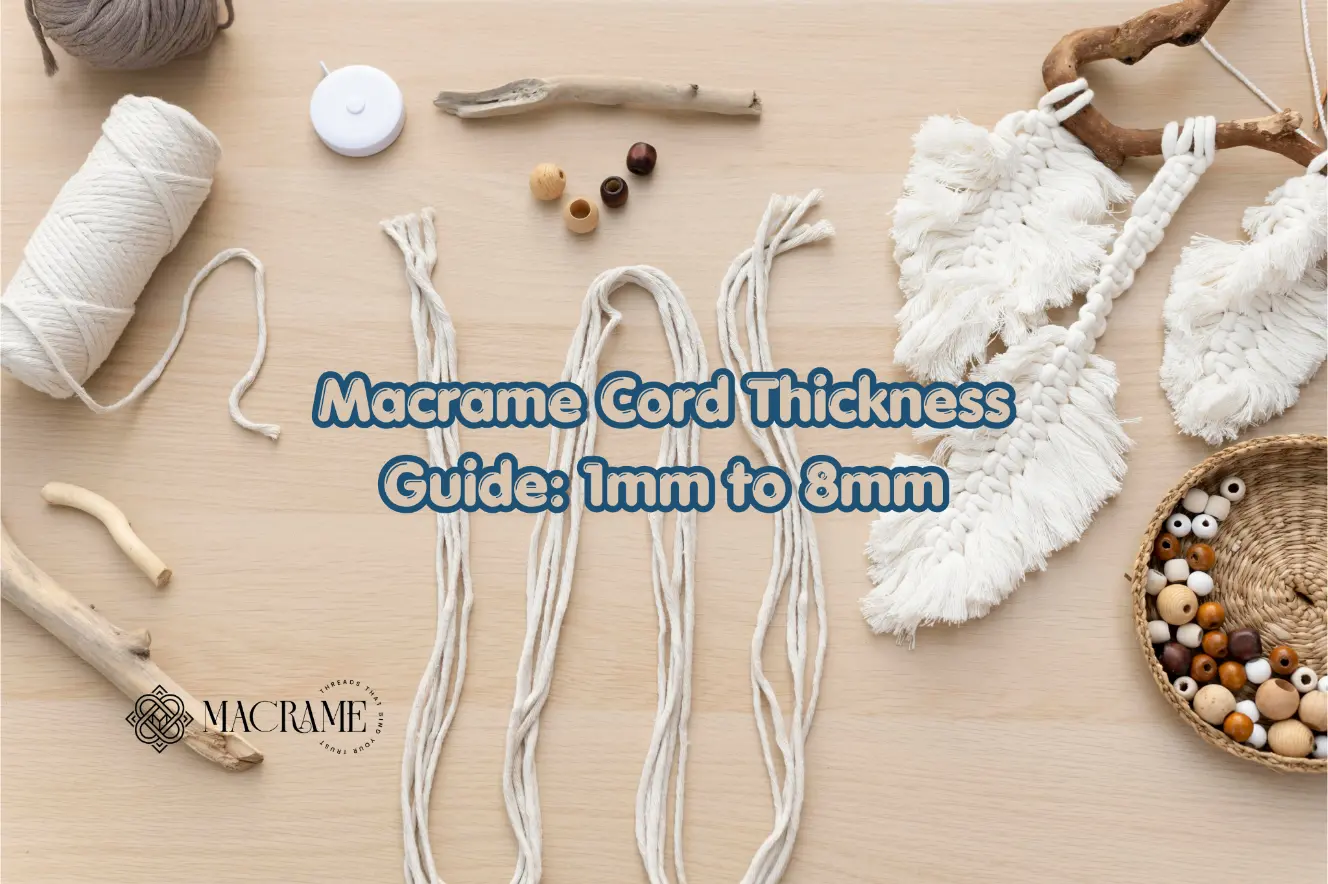
Pick the wrong macrame cord thickness, and even a great pattern looks off. Pick the right one, and the project almost makes itself.
This macrame cord thickness guide covers sizes from 1mm to 8mm. It explains what each size is good for. It also helps you pick the right cord for your project. We’ve made macrame cord in Jaipur since 1990 at Saras Creations. So these recommendations come from 35+ years of seeing what works and what doesn’t.
Quick Answer
1mm to 2mm: Micro-macrame. Bracelets, earrings, necklaces, keychains.
3mm: Detailed wall hangings, coasters, small planters, jewelry holders.
4mm: The all-rounder. Easiest to learn on. Works for almost everything.
5mm: Bigger plant hangers, fuller wall hangings, projects that need bolder knots.
6mm: Large statement wall art, curtains, oversized plant hangers.
7mm to 8mm: Room dividers, headboards, furniture-scale macrame, chunky decor.
If you're new and you want one cord that handles most projects, start with 4mm cord. It's the safest pick suitable for beginner projects. Browse 4mm 3-ply cotton cords.
Full Macrame Cord Thickness Chart
1mm — Micro macrame
Typical Projects: Jewellery, bracelets, earrings, beaded necklaces
Knot Look: Tiny, intricate
Beginner Friendly: Hard, fine motor work
2mm — Micro macrame
Typical Projects: Keychains, friendship bracelets, fine jewellery, tiny planters
Knot Look: Small, defined
Beginner Friendly: Workable for jewellery only
3mm — Standard
Typical Projects: Coasters, small wall hangings, fine plant hangers, table runners
Knot Look: Neat, well-defined
Beginner Friendly: Yes, with practice
4mm — Standard
Typical Projects: Plant hangers, medium wall hangings, bags, curtain ties
Knot Look: Balanced, clear
Beginner Friendly: Best starting size
5mm — Standard
Typical Projects: Larger plant hangers, full wall hangings, cushions, baskets
Knot Look: Bold, fuller
Beginner Friendly: Yes, slightly slower
6mm — Statement
Typical Projects: Large wall art, curtains, room accents, oversized planters
Knot Look: Chunky
Beginner Friendly: Possible, tiring
7mm — Statement
Typical Projects: Headboards, furniture-scale wall hangings, dividers
Knot Look: Very chunky
Beginner Friendly: Hard on hands
8mm — Heavy
Typical Projects: Room dividers, hammock chairs, oversized furniture pieces
Knot Look: Rope-like
Beginner Friendly: Slow, material-heavy
Shop all cord thicknesses from 1mm to 8mm.
How Thickness Changes Your Project
Before getting into each size, here's what actually changes when you go thicker or thinner.
- Project size grows fast. The same wall hanging pattern made in 6mm cord finishes nearly three times the size of the same pattern in 2 mm. Not three times the knots. The cord itself takes up more space.
- Cord usage is not linear. An 8 mm square knot eats roughly four times the cord that a 2mm square knot does. Doubling the diameter can mean triple or quadruple the rope needed.
- Knot definition flips at the extremes. 1mm micro macrame knots look like fine detail only up close. 8mm knots are so chunky that intricate patterns lose their shape and smush together. The 3mm to 5mm range is where knots actually read the way the pattern designer intended.
- Your hands feel it. Tying 7mm or 8mm cord for hours is a physical workout. Each knot needs real force to pull tight. If you have any wrist or hand issues, stay in the 3mm to 5mm range.
- Cost scales harder than you'd expect. Thicker cord uses more material per project and you need more of it. A wall hanging in 8mm can cost five or six times what the same design costs in 3mm.
1mm Macrame Cord
1mm cord lives in the micro-macrame world. This is almost always wax cord, built for jewellery. Bracelets, necklaces, earrings, beaded pendants, cabochon settings, sliding clasps. Anything that touches skin or needs to thread through small bead holes.
The cord is firm and holds shape well. Wax cord stays where you put it, which makes complex knotting like Cavandoli and Josephine knots possible. Without that grip, your patterns would slip apart.
1mm is not for wall hangings, plant hangers, or any project bigger than the palm of your hand. Knots disappear at any real distance. Most wall hangings made with 1mm cord look like fabric from a few feet away, with no visible knot work.
If you're brand new to jewellery-scale macrame, 1mm is actually easier to learn on than 0.5mm. The knots are big enough to see what you did wrong without a magnifying glass.
Use 1mm macrame cords for: wax cord bracelets, necklaces, beaded jewellery, sliding clasps, earrings, cabochon wrapping, gemstone pendants.
Skip 1mm for: anything bigger than a small accessory, plant hangers, wall art, decor.
Shop 1mm wax cords for jewellery or browse our micro macrame cords.
2mm Macrame Cord
2mm sits at the upper edge of micro-macrame and the lower edge of decor work. Friendship bracelets, keychains, fine necklaces, jewelry pieces with more body than 1mm allows. You can also build very small planters or wall accents with it, though you'll be tying knots for a long time.
The big draw of 2mm is bead compatibility. Most small to medium-hole beads will pass through it, which opens up beaded designs that don't work with thicker cord.
Where 2mm starts to fail: anything wall-mounted bigger than 6 to 8 inches. Knots get lost. The piece looks fragile. If you want a wall hanging, jump to 3mm or 4mm and save yourself hours.
Use 2mm for: friendship bracelets, keychains, anklets, beaded necklaces, small planters for tiny succulents, dreamcatcher webbing, hair wraps.
Skip 2 mm macrame cord for: wall hangings, plant hangers for normal pots, any project meant to be seen from across a room.
3mm Macrame Cord
3mm is where macrame stops being jewellery and starts being decor. Knots are clearly defined. Detailed patterns read well. The cord is flexible enough to weave through wooden rings, beads, and dowels without forcing anything.
This is the size to reach for when you care about detail. You can make different knots like tight square knot patterns, switch knots, intricate diamond designs, fine fringes and more. They all show up sharper in 3mm than in 5mm, because the design has room to breathe.
But 3 mm macrame cord struggles with weight. A 3mm cotton plant hanger holds a small terracotta pot fine, but a chunky ceramic planter with wet soil can stretch the cord over time. For wall hangings the size of a piece of A3 paper or smaller, 3 mm macrame cord is the sweet spot. Go much larger and the cord starts looking thin against the wall.
Use 3 mm macrame cord for: detailed wall hangings up to about 18 inches wide, coasters, table runners, jewelry holders, small plant hangers, curtain tiebacks, fine dreamcatcher work, gift wrapping.
Skip 3mm for: heavy ceramic planters, large wall pieces, anything outdoors that needs to take real weight.
Shop 3mm 3-ply twisted cords or try single strand cords for soft fringe.
4mm Macrame Cord
If you only buy one size of cord, buy 4mm macrame cord. It's the size most patterns are written for.
It's the size most YouTube tutorials use. And it's the size most macrame artists started learning on. The knots are large enough to see what you're doing wrong; they look refined, and the cord fits comfortably in your hands.
4mm macrame cord works for the projects most people want to make. It suits plant hangers for medium pots. It also suits wall hangings that fill space above a couch.
You can make market bags. You can also make curtain tiebacks with body. A 4mm plant hanger holds a pot up to about 8 inches across without stretching, which covers most houseplants people own.
The cord also forgives mistakes. Untying a tight 4mm square knot is annoying but possible. Try the same thing with 8mm and you'll start looking for scissors.
Use 4 mm macrame cord for: first macrame projects, plant hangers for small to medium pots, wall hangings 18 to 36 inches wide, market bags, curtain ties, table runners with body, basket bases.
Skip 4mm for: very fine jewellery, very large statement pieces where you want chunky knots to do the visual work.
Our most-ordered thickness. Shop 4mm 3-ply twisted cords in 50+ shades.
5mm Macrame Cord
5mm macrame cord sits in a sweet spot for makers who want fullness without going chunky. Knots are bolder. Wall hangings get that thick, textural look in photographs as well. Plant hangers carry heavier pots without straining.
This is also the size that hides imperfect tension. With 3mm macrame cord, a slightly loose square knot is obvious. With 5mm macrame cord, the cord fills the gap and the knot still looks intentional. That's why some beginners actually do better with 5mm than 3mm, even though 4mm macrame cord is the more common recommendation.
The trade-off: 5mm uses noticeably more cord than 4mm for the same design. A plant hanger that takes 30 meters of 4mm cord can need 38 to 45 meters in 5mm. Same pattern. More rope.
Use 5mm for: larger plant hangers, double or triple plant hangers, wall hangings 36 inches wide and up, outdoor decor, cushions, basket bases, anything you want to look bold but not chunky.
Skip 5mm for: fine detail work, tight pattern repeats, jewellery, or anything that needs to thread through small openings.
6mm Macrame Cord
6mm macrame cord is a statement cord. You use it because you want the macrame to be the focal point of the room. A 6mm wall hanging behind a bed becomes part of the architecture. A 6mm room accent replaces the need for additional decor.
At this thickness, fewer knots do more visual work. You can build a four-foot wall piece with under 50 knots and it will look fuller than a 4mm piece with three times as many. That's the appeal.
The honest part: 6mm is slow, material-heavy, and harder on your hands than 5mm. The cord uses two to three times what 4mm needs for the same project. A full spool can disappear in one big project. Square knots take real force to tighten properly. Plan for breaks if you're working long sessions.
It's also harder to undo a mistake. A tight 6mm knot you tied an hour ago can become a permanent feature whether you wanted it to or not.
Use 6mm for: large statement wall hangings, curtains, oversized plant hangers, chunky cushion covers, headboard accents, pieces meant to be seen from across a room.
Skip 6mm for: learning, anything you might want to redo, anything that needs fine pattern detail.
7mm Macrame Cord
7mm is a step further into furniture-scale territory. Most makers will rarely use it. You’ll see it more often as twisted cotton rope or jute rope from rope suppliers. It is less common from craft cord retailers. This means you may have fewer colour and finish options.
What 7mm does well: full headboards, large wall accents that need to read across an open-plan room, pieces with deep fringe where you want the cord itself to make a visual statement. The knot detail at this size is rough by design. Don't pick 7mm if you want crisp pattern definition.
The reason most makers skip 7mm and jump straight from 6mm to 8mm: limited availability and minimal visual difference from 6mm. Unless a pattern specifically calls for 7mm, you're usually better off picking 6mm for clean detail or 8mm for chunky statement.
Use 7mm for: headboards, large wall art, deep-fringe wall hangings, pieces with heavy braided detail.
Skip 7mm for: most retail projects, anything where 6mm or 8mm would work just as well.
For projects in this range, browse our ropes collection with twisted, braided, and furniture-grade options.
8mm Macrame Cord
8mm is a macrame rope, not cord. At this thickness you're working with material closer to clothesline or furniture rope than craft string. It's used for furniture-scale macrame: room dividers, hammock chairs, oversized headboards, large door curtains, sculptural wall pieces meant to anchor a room.
The knot count drops dramatically. A piece that needs 200 knots in 4mm might use 40 in 8mm and still look fuller. That's the trade-off: visual impact for free, at the cost of material and time per knot.
Plan ahead before buying. 8mm projects often need 80 to 120 meters of cord for a single piece. That's a serious material investment. Hand fatigue is also real at this scale, so structure your work into shorter sessions.
Cotton 8mm macrame rope is the most commonly used one. But for outdoor or load-bearing pieces, look at polypropylene or jute rope. Cotton at 8mm holds weight well indoors but absorbs moisture outside and can rot.
Use 8mm macrame rope for: room dividers, hammock chairs, oversized wall hangings, statement door curtains, sculptural macrame furniture, headboards.
Skip 8mm for: anything that needs delicate pattern work, beginner projects, anything you don't have hours to commit to.
Shop twisted ropes, braided ropes, or furniture-grade ropes for 8mm projects.
Which Thickness for Which Project
Cross-referenced from the projects most makers actually build:
Browse the full cord catalogue to find the right thickness for your project.
How Much Cord You'll Actually Need
A rough rule that holds across most projects: cord length should be about four times the finished project length, per strand, before folding. So a 30-inch wall hanging with cords folded in half needs 240 inches of cord per strand, multiplied by the number of strands.
That rule shifts with thickness:
1mm to 2mm: 3 to 4 times finished length per strand
3mm: 4 times
4mm: 4 times (the baseline rule)
5mm: 4.5 to 5 times
6mm: 5 times
7mm to 8mm: 5.5 to 6.5 times
Dense patterns with packed square knots need more. Loose patterns with long unknotted sections need less. When in doubt, add 10 percent the first time you try a pattern. Running out two knots from the end is one of the most frustrating things in this craft.
How to Convert a Pattern to a Different Thickness
Patterns are usually written for one specific cord size. If you have the wrong size on hand, here's how to adjust:
Multiply by a ratio. Going from 5mm to 3mm, multiply each cord length by 0.6. Going from 3mm to 5mm, multiply by 1.5. From 4mm to 8mm, multiply by 1.8.
Adjust mounting length. Thicker cord makes the finished piece bigger overall, so you may want a longer dowel or branch.
Test on a small section first. Tie three or four knots in your new size before cutting all the cord. You'll spot tension and spacing issues early.
Add 10 percent buffer. Conversions almost always need more cord than the math suggests. Cut long, you can trim later.
Cord Construction Matters Too
Thickness is half the decision. How the cord is built changes how it behaves, and it's worth knowing before you order a spool you can't return.
Single strand cord: One bundle of fibres twisted together. Comes apart easily for fringe and brushing out, but unravels if you untie knots a lot. Best when you know your pattern and want a soft, brushable finish. Shop single strand cords.
3-ply twisted cord: Three strands twisted around each other. Strong, holds shape, gives a defined rope look. Great for plant hangers and structured wall pieces. Doesn't brush out into fringe easily. Shop 3-ply twisted cords.
Braided cord: Strands woven into a tube. Won't unravel even when cut, doesn't fringe at all. Easiest for absolute beginners because mistakes are recoverable. The trade-off is no fringe option, so all your ends need a different finish. Shop braided cords.
Wax cord: Mostly applies to fine cord used in jewellery. The wax coating gives grip and holds knots in place even before tightening. Essential for sliding clasps and complex jewellery knots. Shop wax cords.
Knitted silky cord: Smooth, lustrous finish with a soft drape. Good for fashion-forward bags, purses, and pieces where you want a polished look. Shop knitted silky cords.
A 4mm single strand cord behaves nothing like a 4mm braided cord. If a pattern specifies a type, follow it. If it doesn't, default to 3-ply for structure and single strand for anything with fringe.
Material Affects Thickness Choice Too
The same thickness in different materials behaves differently. Worth knowing before you commit:
Cotton: Soft, easy to knot, brushes out for fringe, the default for most projects. Available across the full 1mm to 8mm range. Absorbs moisture, so not ideal outdoors.
Jute: Rougher texture, rustic look, resists rot, great for outdoor use. Usually only sold in 3mm and up. Harder on hands for long sessions. Shop jute cords.
Polypropylene (PP): Synthetic, weather-resistant, ideal for outdoor hangers, knot cords, and pieces with bright colours. Doesn't fringe. Shop PP knot cords.
Satin cord: Smooth, shiny, used in jewellery, decorative knotwork, and gift packaging. Comes in fine sizes. Shop satin cords.
Wax cord: Jewellery-specific. Holds knots without slipping. Shop wax cords.
Common Mistakes When Choosing Thickness
Buying too thin to save money. A 2mm cord looks cheaper per meter, but you'll use so much more of it on a big project that you spend the same or more, plus weeks of extra knotting time.
Going too thick because the photos look cool. Chunky 8mm wall hangings dominate Instagram. Making one means hours of forearm work and a serious material cost. Try 5mm or 6mm first.
Ignoring cord construction. Buying a 4mm braided cord when the pattern calls for 4mm single strand gives you a finished piece that looks nothing like the photo. Same diameter, different cord.
Not buying enough. Macrame patterns underestimate cord needs more often than they overestimate. If a pattern says 25 meters, get 30. Cord thickness also varies slightly between suppliers even at the same labeled mm. Stick with one source for consistency.
Mixing suppliers mid-project. A 4mm cord from one supplier can be visibly thinner or softer than 4mm from another. If you run out, try to buy from the same source again. If you can't, save the new cord for sections that won't sit right next to the old.
Skipping the test knot. Tying 3 or 4 knots in your chosen cord before cutting all your lengths costs you 5 minutes and saves you from realising 3 hours in that the cord is wrong for the pattern.
What Beginners Should Actually Buy First
If you're starting out, here's the no-overthinking version:
One 100m spool of 4mm 3-ply natural cotton cord. This handles 80 percent of beginner projects.
One small spool of 3mm if you want to try detailed wall hangings.
Skip everything below 2mm and above 5mm until you know what you actually want to make.
That's it. Cord is the area where new makers spend too much money before they've made anything. Get the all-rounder, finish three or four projects, then expand into other thicknesses once you know your style.
New to macrame? Start with our 4mm 3-ply cotton cord and use code FIRST10 at checkout for 10% off your first order.
Why Buy Macrame Cord From Us
We've been manufacturing macrame cord in Jaipur since 1990 as Saras Creations. Every spool ships from our own facility, not a reseller's warehouse. That means consistent GSM, consistent ply count, and consistent colour-fastness across batches. If a studio orders the same shade three months apart, the dye lots match.
We ship free across India to over 19,000 pincodes with no minimum order. International orders go to the USA, UK, Canada, Australia, UAE, Singapore, Germany, and most other countries, with multi-currency checkout in INR, USD, EUR, GBP, JPY, and CAD. Bulk and wholesale pricing is available for craft schools, decor studios, wedding planners, and manufacturers.
Over 500,000 crafters have ordered from us. Read our full story or contact us for bulk orders.
FAQ
What is the most common macrame cord thickness?
4mm is the most common macrame cord thickness. Most patterns, tutorials, and ready-to-buy spools default to 4mm because it balances knot definition, hand comfort, and project versatility. If you walk into a craft store and grab a generic cotton cord, it's likely 4mm.
What thickness of macrame cord is best for beginners?
4mm or 5mm cord is best for beginners. The knots are large enough to see clearly, the cord is easy on your hands, and most beginner tutorials are built around these sizes. Avoid 1mm and 2mm at the start because the knots are too small to learn from, and skip 7mm and 8mm because they're slow and tiring.
Can you use 1mm cord for macrame?
Yes. 1mm cord is the standard for micro-macrame, especially wax cord used in bracelets, necklaces, and earrings. It's not used for wall pieces or plant hangers because the knots are too small to read at scale.
What is the difference between 6mm and 8mm macrame cord?
Both are statement sizes, but 8mm macrame cord is noticeably chunkier. 6mm still allows reasonable knot detail and works for large wall hangings, curtains, and oversized plant hangers. 8mm is closer to rope, used for furniture, room dividers, headboards, and pieces where the cord itself is the design feature. 8mm uses roughly 30 to 40 percent more material than 6mm macrame cord for the same project.
How thick should macrame cord be for a plant hanger?
4mm to 5mm for indoor plant hangers. 4mm holds pots up to about 8 inches across with room to spare. 5mm is the safer pick for heavier ceramic or stoneware pots, or for outdoor hangers that need extra strength. 6mm and above are reserved for oversized planters or when the chunky look is the point.
How thick should macrame cord be for a wall hanging?
Match the cord to the wall hanging size. Small pieces under 18 inches wide look best in 3mm to 4mm. Medium pieces 18 to 36 inches wide work well in 4mm to 5mm. Large statement pieces over 36 inches wide need 5mm to 8mm cord so the knots read from across the room.
How much extra cord do I need when going up in thickness?
Plan for about 20 to 25 percent more cord for each size up. A pattern calling for 5mm cord at a given length needs roughly 1.5 times that length in 8mm. Always add 10 percent buffer when converting cord sizes, because thicker cord eats more length per knot than the math suggests.
Does cord thickness affect how strong the macrame is?
Yes, but not as much as people think. A well-tied 4mm cotton cord plant hanger holds typical houseplants without issue. Going thicker mostly adds visual weight and slight extra security, not dramatic strength gains. Cord material matters more than thickness for load-bearing projects, with cotton, jute, and polypropylene all behaving differently.
Can I mix different thicknesses in one project?
Yes, and it often looks great. A common combination is 4mm body knots with 2mm or 3mm accents for fine detail. Keep load-bearing strands the thicker size. Mixing thicknesses works best when there's a clear design reason, not just because you ran out of one.
Why does the same 4mm cord look different from different suppliers?
Cord measurement isn't standardised across the industry. A 4mm cord from one supplier can be visibly thinner or softer than another supplier's 4mm. Differences in fibre quality, twist tightness, and number of plies all affect how the cord looks and feels even at the same labeled diameter. Buying from a manufacturer rather than a reseller gives more consistent results.
Conclusion
To sum up choose 1mm for jewellery, 2mm macrame cord for keychains and friendship bracelets.
3mm for fine wall hangings and coasters. 4mm macrame cord for everything if you're starting out.
Use 5mm for bolder pieces and bigger plant hangers and other sizes for large wall arts.
Cord thickness is the biggest single decision before you tie a knot. Get it right and the project almost makes itself. Get it wrong and even a great pattern looks off.
When in doubt, go one size thicker than the pattern says rather than thinner. Thicker forgives. Thinner punishes.
Once you've made a project or two, you'll start to feel the difference between sizes the way a baker feels flour. Until then, trust 4mm macrame cord and build from there.
Ready to start? Explore different types of macrame cords to choose the right cord you need. Visit Free shipping across India by shopping at Macrame. Use code FIRST10 for 10% off your first order.
Before you begin, learn the beginner macrame mistakes that save you hours of time and effort.
For
Last updated: August 2026
Written by the Macrame.co.in team. Saras Creations has been manufacturing macrame cord in Jaipur since 1990. Trusted by 500,000+ crafters across India and globally.